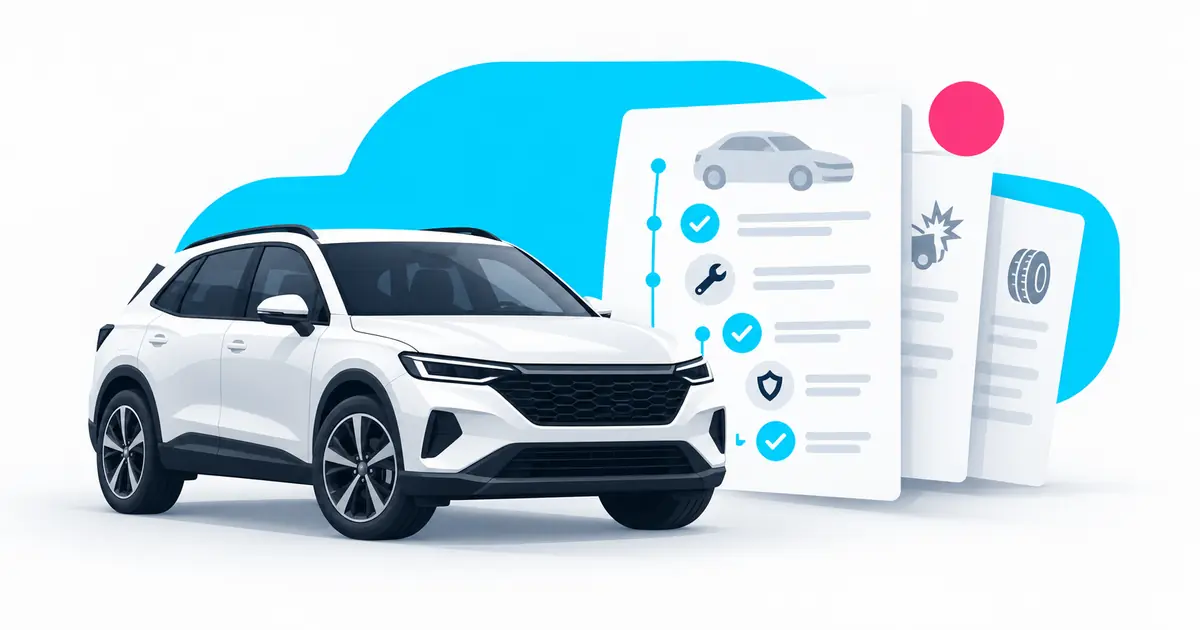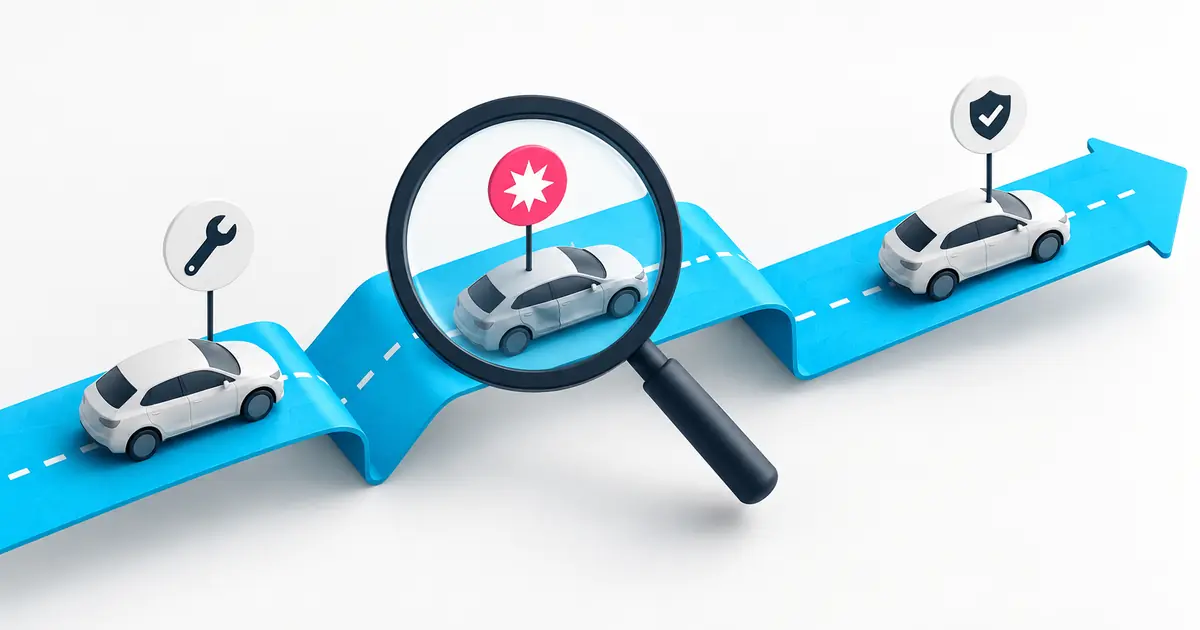
A salvage-title check should happen before you agree to buy a used car, not after money has changed hands. Start by getting the vehicle identification number (VIN), asking to see the title paperwork, and comparing every detail. Then use an independent vehicle-history source and arrange a careful inspection. A title history can raise important questions, but it is only one part of deciding whether this particular car is right for you.
Start with the VIN, not the listing
Ask the seller for the VIN early in the conversation. A seller who will not provide it, or who provides a VIN that does not match the vehicle, deserves extra scrutiny.
Compare the VIN in the listing, on the vehicle, and on the title paperwork. Look for mismatched characters, signs that a label or plate has been altered, or documents that do not appear to belong to the car in front of you. A VIN decoder can help you understand the vehicle’s identifying details; see our VIN decoding guide for a clear distinction between decoding a VIN and researching its history.
Do not rely on a photo alone. View the actual vehicle and the original paperwork before finalizing the deal. If the seller’s explanation changes when you compare the records, pause rather than trying to solve the discrepancy on the spot.
Check the title paperwork closely
Read the title rather than just asking whether the car has a “clean” title. Look for any wording or markings that require an explanation. Title terminology and procedures can differ by state, so use the motor-vehicle agency for the state shown on the document to confirm what a particular designation means and what steps may be required to register the vehicle where you live.
Ask the seller direct, open-ended questions:
- Why is the vehicle being sold?
- Has it ever had major damage or been declared a loss by an insurer?
- Who performed any repairs, and are repair records available?
- When did the seller acquire the car?
- Is the title in the seller’s name, and does the VIN match the car?
Keep the answers with the listing and paperwork. The point is not to catch someone out; it is to build a consistent record of the vehicle’s story. A vague answer is a reason to ask for more documentation, not a reason to assume the best or the worst.
Use a vehicle-history report as a second source
An independent history search can help you compare the seller’s account with records associated with the VIN. The U.S. Department of Justice’s National Motor Vehicle Title Information System (NMVTIS) says it is designed to protect consumers from fraud and unsafe vehicles and to keep stolen vehicles from being resold. Its consumer information also directs buyers to obtain an NMVTIS vehicle history report when they need to investigate a junk or salvage record, an insurance total-loss record, or title and brand information with odometer data.
That makes a report a useful research tool before purchase, especially when the paperwork or condition of the car leaves unanswered questions. It is not a substitute for seeing the car or for an inspection. Records can require interpretation, and a missing item should not be treated as proof that an event never occurred.
Our VinAudit review explains one service focused on NMVTIS records. If you are comparing report options, read the description of each provider’s records and limitations before deciding what to use. Keep a copy of the result with the VIN and the date you checked it.
Treat a salvage or loss record as a prompt for evidence
A title or history record does not tell you, by itself, whether the repairs were appropriate or whether the car is a good purchase. It tells you that you need more evidence.
Ask for invoices, photographs taken before and during repairs, and any inspection documentation the seller has. Compare the claimed work with what you can see. Pay attention to panel gaps, paint differences, warning lights, water staining, unusual odors, and inconsistencies in the interior or under the hood. These observations do not diagnose a problem, but they can show where a qualified inspector should look more closely.
Damage history can also affect how buyers view a vehicle later. Read how accident history affects a used car’s value to understand why the nature of the damage, the repair quality, and the evidence available matter more than a one-word label.
Get an independent pre-purchase inspection
For a car with a salvage, junk, insurance-loss, or unclear history record, an independent pre-purchase inspection is particularly important. Choose a qualified inspector who has no stake in the sale and give them the records you collected. Explain what you want clarified, but do not ask them to simply confirm a conclusion you already reached.
An inspection can assess the vehicle’s present condition; paperwork and history research help you work out what to ask about its past. You need both. Our used-car pre-purchase inspection checklist can help you prepare for that appointment and organize the questions for the seller.
If the seller refuses a reasonable independent inspection, cannot produce the documents they promised, or pressures you to move forward before you can verify the records, it is sensible to step back. There will be other cars.
Know what to do if a record seems wrong
Do not assume a surprising record is automatically correct or automatically an error. Save the report, the seller’s paperwork, and notes from your conversations. Then identify which organization reported the item and ask what documents it needs to consider a correction.
NMVTIS explains that a consumer who believes a junk or salvage record is incorrect should notify the listed reporting entity and request that it submit an amendment. For a title or brand record with incorrect odometer information, NMVTIS directs the consumer to contact the Department of Motor Vehicles for the state that reported the record. Those are useful starting points, but do not make the purchase contingent on a correction that has not yet been confirmed.
Make the decision on the complete file
Before you buy, put the VIN comparison, title paperwork, history results, repair evidence, and inspection findings together. Look for a story that is consistent and supported by documents. If an important part remains unclear, a good price does not make the risk go away.
A careful salvage-title check is not about finding a single pass-or-fail answer. It is about giving yourself enough reliable information to decide whether to proceed, negotiate based on documented condition, or walk away. If you also have concerns about the vehicle’s identity or theft status, follow the separate steps in our guide on checking whether a used car is stolen.