Buying a used car is a decision about one particular vehicle, not just its make, model, or mileage. A pre-purchase inspection helps you look past a clean listing and a short test drive before you commit.
The goal is not to prove that a used car is perfect. It is to identify condition issues, unanswered questions, and work you may need to budget for. Pair an in-person inspection with document and history checks so that each source can be checked against the others.
What a pre-purchase inspection is for
A pre-purchase inspection is an independent assessment of a car before you buy it. It can help you decide whether to proceed, ask the seller for clarification, renegotiate based on documented concerns, or walk away.
An inspection is most useful when it is arranged before money changes hands and when the person examining the car has no stake in the sale. Ask the seller early whether they will make the vehicle available for an inspection and a proper test drive. A seller’s answer is information in itself, but it is not proof of a problem or proof that the car is sound.
A general used-car checklist is a good starting point, but it does not replace a close look at the vehicle. Use this guide alongside our used-car buyer’s checklist to keep the process organized.
Do your own checks before booking an inspection
Start with the listing, the car, and the paperwork. These checks help you spot discrepancies and give the inspector better questions to investigate.
Match the vehicle’s identity
Ask to see the VIN and compare it carefully with the VIN shown on the vehicle and in the documents. Look for signs of alteration, missing labels, or numbers that do not match. If you need help understanding what the identifier is and where it may appear, read what a VIN is and how to find it.
Do not rely on a VIN decoder alone. Decoding can help identify a vehicle’s basic specification, while records and documents may help you form questions about its past.
Look for consistency, not perfection
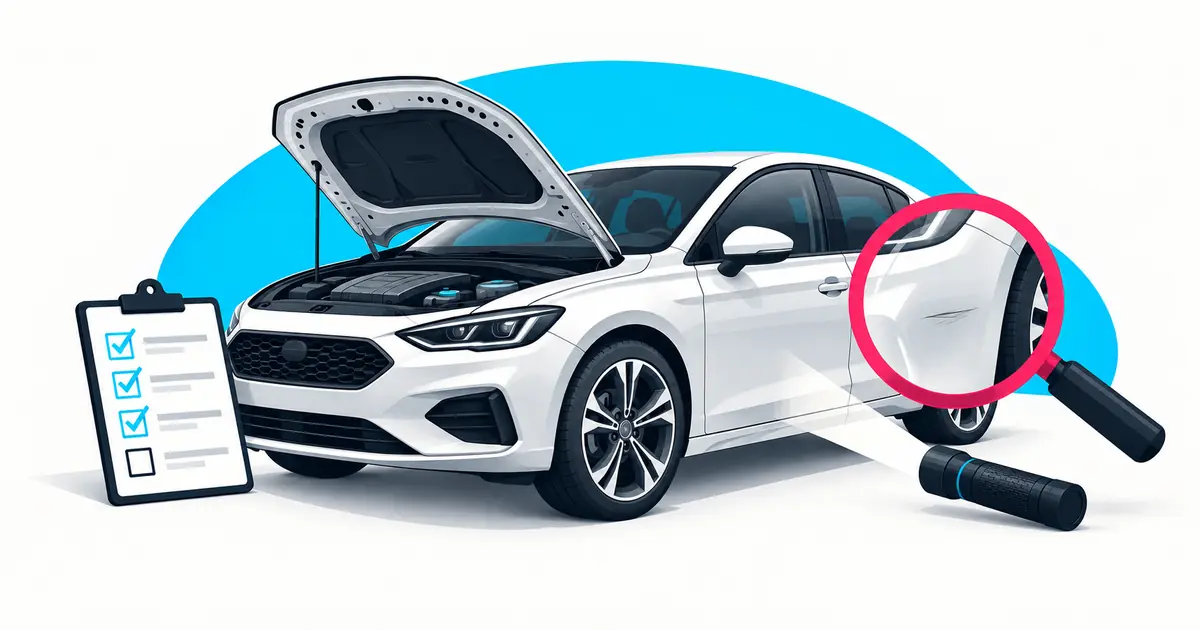
Walk around the car in daylight if possible. Check that panel gaps, paint finish, trim, lights, glass, tires, and interior wear make sense together. None of these observations establishes a car’s history by itself. They are prompts to ask for an explanation and, where appropriate, to have a qualified person look closer.
Pay particular attention to:
- uneven paint color or texture;
- overspray on trim, seals, or lights;
- corrosion, leaks, or damage underneath the car;
- warning lights at startup or while driving;
- tire condition and uneven wear;
- damp carpeting, unusual odors, or water marks;
- controls, screens, heating, air conditioning, and safety-related equipment that do not operate as expected.
Previous damage can affect both condition and value, but its significance depends on the vehicle and the quality of any repair. Our guide to how accident history can affect a used car’s value explains why the details matter more than a simple label.
Use a vehicle history report before the inspection
Order or review a vehicle history report early enough to act on what it shows. A report can give you topics to raise with the seller and the inspector, such as recorded mileage entries, title-related records, damage-related entries, or gaps in the vehicle’s story. It cannot establish the current mechanical condition of the car, and an inspection cannot guarantee that every historical event was recorded.
If you are considering a report, see the carVertical discount page for the current way to get one. Take the VIN, the report, and a short list of discrepancies to the inspection. Ask the inspector to focus on anything that does not line up with the seller’s description, paperwork, or the condition you can see.
Mileage deserves the same careful comparison. Compare the odometer reading with service paperwork, inspection records where available, listing photos, and report entries. Learn more about how mileage and age affect a used car’s value, but avoid treating mileage alone as a verdict on the car.
How to arrange the inspection
Choose an independent repair shop, a mechanic familiar with the vehicle type, or a qualified inspection service. Explain the vehicle’s year, make, model, powertrain, and where it is located. Ask what their inspection includes, how long it is likely to take, whether they can road-test it, and how they will document their findings.
Give them your questions in advance. Useful examples include:
- Are there signs of active leaks, overheating, or poor repairs?
- What is the condition of the brakes, tires, steering, suspension, and underbody?
- Are there diagnostic warnings or fault codes that need further diagnosis?
- Do the engine, transmission, electrical systems, and accessories behave normally during the inspection and road test?
- Do you see evidence that supports or conflicts with the documents and history information I have?
- Which findings affect safety, near-term repair needs, or the decision to buy?
For an electric or hybrid vehicle, ask whether the inspector can assess the specific systems and whether a specialist is advisable. The inspection approach may differ from a conventional gasoline vehicle; our used electric car buying guide can help you prepare additional questions.
Take a deliberate test drive
A test drive is not a substitute for an inspection, but it lets you experience the car in normal use. Start with the engine cold only if the seller agrees and it is practical. Listen for unusual noises, feel for vibration or pulling, and check how the brakes, steering, transmission, and major controls behave.
Drive a route that safely includes ordinary stops, turns, changes in speed, and imperfect pavement. Do not diagnose a fault from one sensation. Instead, write down what happened, when it occurred, and the conditions so an inspector can investigate it.
Read the findings before you negotiate
Ask for the inspection findings in a form you can review. Separate immediate safety concerns, items that need further diagnosis, likely maintenance, and cosmetic issues. Then compare the findings with the asking price, your budget, the car’s history information, and the alternatives you could buy.
Avoid making a decision while you are under pressure. If the seller will not allow reasonable checks, the VIN or paperwork does not match, or important questions remain unanswered, it is reasonable to pause or move on. There will be other cars; an inspection is valuable because it gives you a clearer basis for choosing one.