


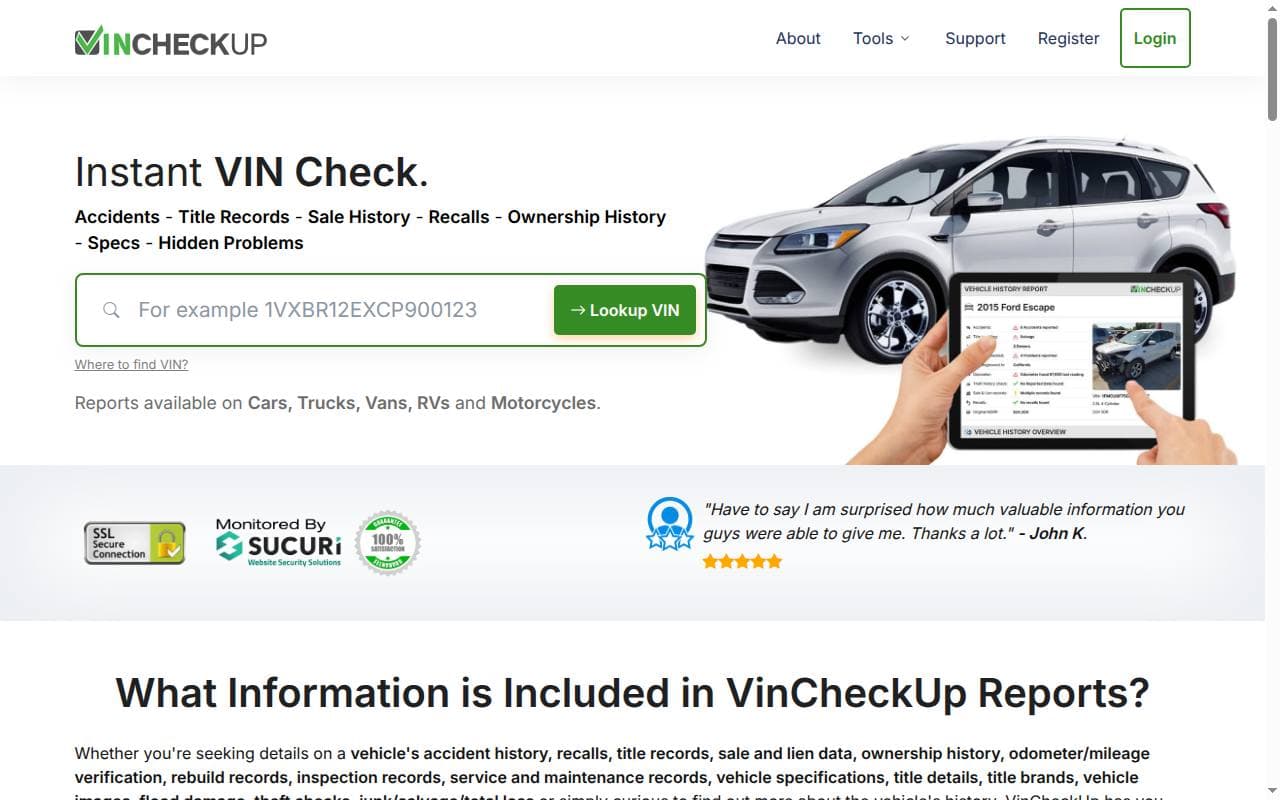
VINCheckUp provides vehicle history reports, primarily for vehicles with records in the United States. This review explains the information to look for, how to order a report, the available packages and the limits of a VIN check.
VINCheckUp Overview
VINCheckUp searches vehicle records using a VIN and presents the results in a history report. Buyers can use the information to compare a seller’s description with recorded mileage, title events and reported damage. How useful a report is depends on the records available for that particular vehicle.
A report can flag questions to ask before you buy, such as a change in recorded mileage or an earlier title brand. It should be used alongside the title documents, service records and a physical inspection.
VINCheckUp Pros
1. Comprehensive Vehicle History Reports
The report can bring several categories of vehicle information together. Depending on available records, these may include:
- Ownership history
- Title and registration details
- Accident records
- Mileage history
- Recall and safety information
- Potential problems and red flags
Use the entries to decide what to ask the seller and which documents to request. The report does not assess the car’s current mechanical condition.
2. User-Friendly Interface
The website handles the lookup and access to the report in one place. Review a sample first to see whether the layout explains the records and their limitations clearly enough for your needs.
3. Comparing package prices
Compare the total package price with the number of vehicles you plan to check. A lower price per report only pays off if you use the extra reports before access runs out.
4. Online report access
You access reports online once you’ve done the lookup and paid. A payment, account or processing problem can delay access, so keep your order confirmation.
5. Nationwide Database Coverage
VINCheckUp searches records associated with US vehicles. Nationwide coverage does not guarantee a complete history: an unreported accident, a private repair or an unavailable source may leave a gap.
VINCheckUp Cons
1. Limited Free Information
The initial search may show basic vehicle information. Check what is available before payment; a preview is not the same as a paid history report.
2. Limited International Coverage
VINCheckUp is mainly useful for US vehicle records. For an imported vehicle, check whether information is available from the other countries where it was used. A US report can’t give you the full history of a car that has also been driven elsewhere.
How to Decode Your VIN Number Using VINCheckUp
Start with the VIN on the vehicle and compare it with the title or registration documents. A standard modern VIN has 17 characters; older vehicles may use a different format. Common locations include:
- On the driver's side dashboard, visible through the windshield
- On the driver's side door jamb
- On the vehicle's registration, insurance, or title documents
Once you have located your VIN number, follow these simple steps to decode it using VINCheckUp:
- Visit the VINCheckUp website at www.vincheckup.com.
- On the homepage, enter your VIN number in the search box.
- Click the "Search" button to initiate the VIN decoding process.
- If you're using the free version, you'll receive a basic report with limited information. To access a detailed report, click the "Get Full Report" button and proceed to the payment page.
- Enter your payment information and complete the transaction.
- Once the payment is processed, you'll have instant access to your detailed vehicle history report.
Read the history chronologically and compare it with the seller’s account. Look into any discrepancy before deciding whether to go ahead with the purchase.
VINCheckUp Report Details
The categories below describe what to look for in a report. Not every vehicle will have records in every section:
- Vehicle Specifications: Details about the make, model, year, engine, and other specifications of the vehicle.
- Title and Ownership History: Information about past owners, including the duration of ownership and any title issues.
- Accident records: reported damage or collision entries from available sources, sometimes with additional details. The absence of a record does not prove that the car has never been damaged.
- Mileage History: A record of the vehicle's mileage over time, which can help detect odometer fraud.
- Recall and Safety Information: Information about any recalls or safety issues associated with the vehicle.
- Potential Problems and Red Flags: A summary of potential issues or warning signs that may affect the vehicle's value or safety.
- Service History: Available service and maintenance records.
- Theft History Check: Available theft-history records.
- Sale & Lien Records: Available sale and lien records.
- Commercial User History: Available commercial-user history.
- Vehicle Images: Available vehicle images.
- Auction Records: Available auction records.
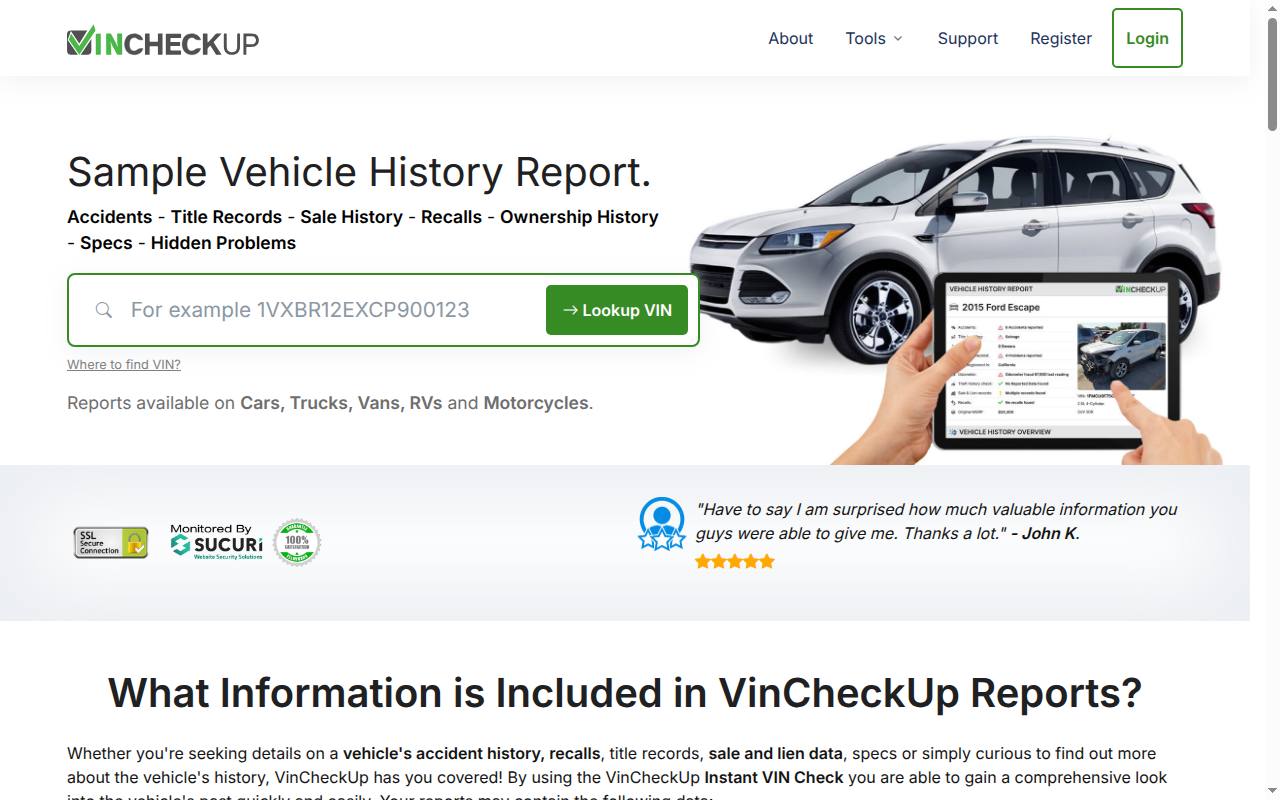
Use these records to identify inconsistencies and decide what needs further investigation. They do not guarantee that a vehicle is free from hidden damage, fraud or mechanical problems.
Pricing
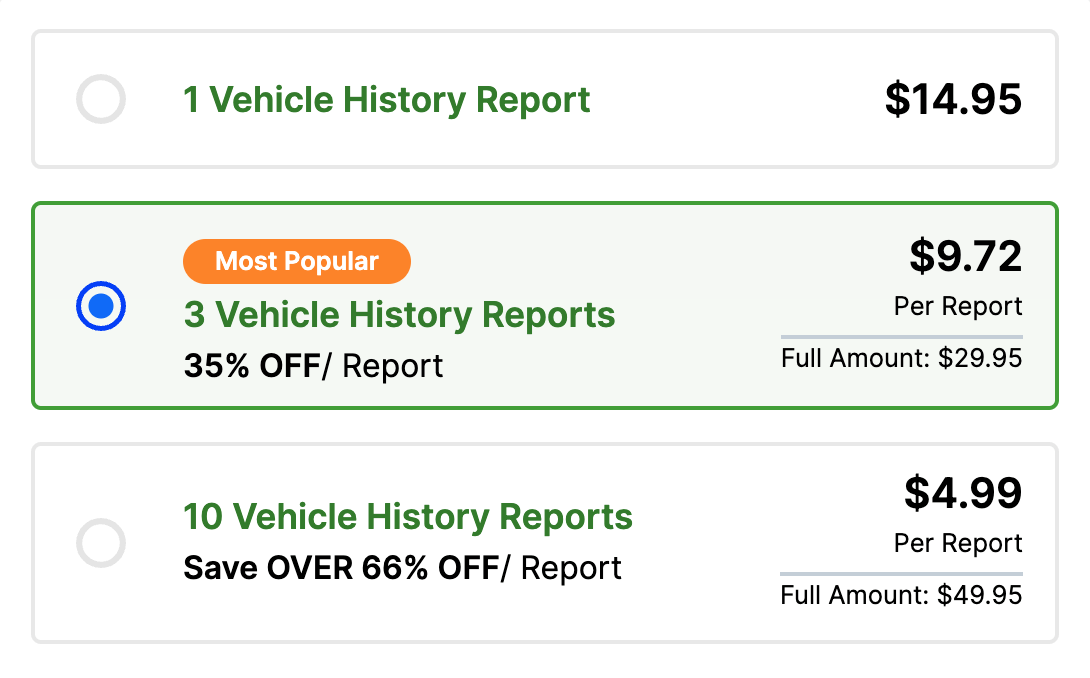
VINCheckUp’s published pricing page lists the following packages. Confirm the final price and report-access terms before payment:
- One report: $19.95, for checking one vehicle.
- Three reports: $29.95 for the package.
- Ten reports: $49.95 for the package.
A preliminary search may provide limited information before purchase. The pricing page states that the service does not use recurring monthly subscriptions and that purchased reports are available to view or download for 30 days. Check these terms when ordering.
Payment Options
Use the payment methods offered by the official checkout for your order. Confirm the total and keep the payment receipt with your report details.
How Does VINCheckUp Stack Up Against the Competition?
Compare VINCheckUp with other services using the records needed for the same vehicle:
- Price: compare the total charge and number of included checks, rather than assuming that an older package is still the cheapest.
- Presentation: check whether the sample report makes source dates, title brands and mileage changes easy to interpret.
- Report contents: compare available records, not just a list of categories that may be empty for your VIN.
However, there are some areas where competitors may have an edge:
- International Coverage: VINCheckUp primarily focuses on vehicles in the United States, limiting its usefulness for those seeking information on vehicles from other countries.
VINCheckUp is one option for checking a vehicle’s US history. Compare its report preview, coverage and package terms with the alternatives instead of assuming that a lower price means equivalent information.
Customer Support
For questions about a report, payment or account, use the support channels listed on VINCheckUp’s website:
- Email: VINCheckUp provides an email address for users to send inquiries or report issues.
- Contact Form: Users can also fill out the contact form available on the website.
Include the VIN, order details and a description of the issue in your inquiry. If you’re disputing a recorded fact, include supporting documents. This review can’t guarantee a response time.
Conclusion
VINCheckUp can help organize available US vehicle records before a purchase. Review the data found for your VIN, the package price and access period. If the report is thin or shows a discrepancy, dig deeper, and don’t treat a clean section as proof that the car is problem-free.
Frequently Asked Questions (FAQs)
Is VINCheckUp free?
Basic information may be available before purchase, while detailed reports require payment. The published packages cover a fixed number of reports; check the quantity and access period you are buying.
Are there any discounts available for VINCheckUp?
Check the current offer and its conditions. An older coupon or package price may no longer apply.
How accurate is the information provided by VINCheckUp?
Accuracy depends on the underlying records and their timing. Check unexpected entries against the vehicle’s documents and ask support to clarify discrepancies. A report cannot include an event that was never recorded in an accessible source.
Can I use VINCheckUp for vehicles outside the United States?
VINCheckUp primarily focuses on vehicles in the United States, which may limit its usefulness for those seeking information on vehicles from other countries.
How do I find my vehicle's VIN number?
You can typically find the VIN number on the driver's side dashboard, the driver's side door jamb, or on the vehicle's registration, insurance, or title documents.
Is my payment information secure with VINCheckUp?
Use the payment methods shown on the official checkout and review the amount before you pay. Check the checkout domain and keep your payment confirmation for the order.
Does VINCheckUp offer a mobile app?
VINCheckUp has an iOS listing in Apple’s App Store. Check the provider’s official links for availability on your device and region; app prices and packages may differ from the website.
How long does it take to receive a vehicle history report from VINCheckUp?
You access reports online once you’ve done the lookup and paid. A payment, account or processing problem can delay access, so keep your order confirmation.
What information is included in a VINCheckUp report?
Depending on the available records, a report may show specifications, title events, recorded mileage, damage and recall-related information. Check the entries for your VIN; a list of report categories does not guarantee data in every section.
Can I trust the information provided by VINCheckUp?
Treat the report as one source of evidence. Compare it with the title, service documents and an independent inspection, particularly when the seller’s account differs from recorded history.